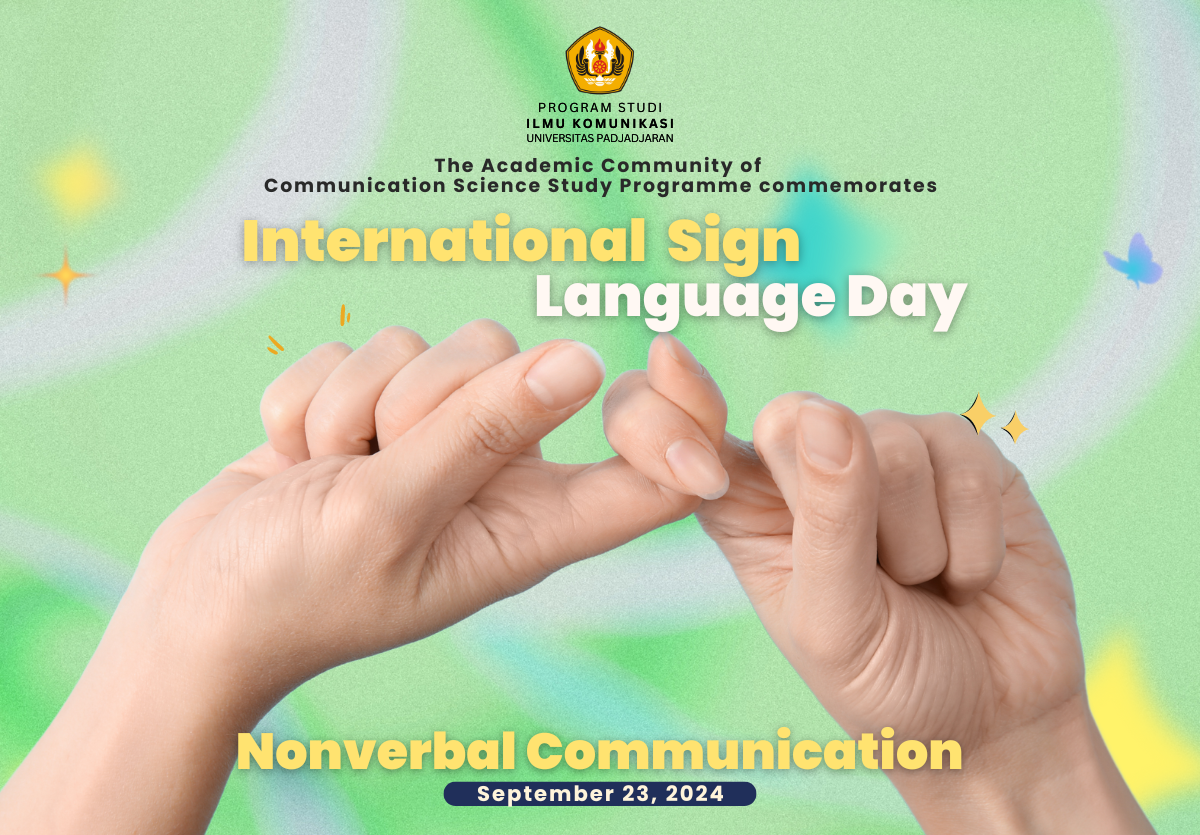
On the 23rd of September, the entire world commemorates the International Day of Sign Languages every year. The inauguration of this day was done by the United Nations based on the creation of the World Federation of The Deaf (WFD) in 1951. The International Day of Sign Languages highlights the importance of using sign languages and to fight for individual rights, especially the rights of deaf people.
This year, the International Day of Sign Languages carries the theme of “Sign Up for Sign Language Rights” to increase global support for the legal acknowledgement of sign languages. Through said theme, the entire world pushes for a better implementation of the UN’s Convention on the Rights of Persons with Disabilities (CRPD) which was established in December 2006. Based on data from WFD, there are more than 70 million deaf people in the entire world with more than 80% of them living in developing countries. Today, there are more than 300 sign languages that are being used collectively.
In Indonesia, there are two different sign language systems that are commonly used, namely Sistem Isyarat Bahasa Indonesia (SIBI) and Bahasa Isyarat Indonesia (Bisindo). SIBI was developed by hearing people who adopted the American Sign Language (ASL) to adapt Bahasa Indonesia into sign languages. On the other hand, Bisindo was created by the deaf community to facilitate the communication between deaf people.
SIBI was established through SK No. 0161/U/2994 on June 30, 1994 by the Minister of Education and Culture. Until this day, SIBI is still being widely used as the introductory language for communication in Special Education schools. Meanwhile, Bisindo hasn’t been recognized officially by the government, but it’s still used as the deaf community’s language. With that being said, Bisindo is the more commonly used sign language system out of the two.
The progress of national research about sign languages in communication so far centers around the comparison between SIBI and Bisindo in effectiveness and also the social interaction of deaf people. Based on research done by Nugraheni, dkk. (2021), Bisindo usage is more optimal for the deaf people in UIN Sunan Kalijaga because it is easier to understand, easier to articulate, more effective and expressive, and also it’s the genuine language in deaf communities. The SIBI system was seen as too complex which is why using it is harder than Bisindo.
Similar findings are shown in a more recent research by Putri, et al. (2024) which studied the communication approach used by teachers in social interactions with deaf students. In their research, they discovered that there are 3 communication media that they use in learning processes, namely SIBI, Bisindo, and visual media. Out of all three, Bisindo is the most commonly used between students.
There is also a couple of research that focuses on developing a sign language model using the machine learning method with the pattern recognition technology. One of them was done by Sari, et al. (2023) to develop a system that can identify hand movements and translate them into text or speech so that hearing people can understand them. The system was built on Bisindo based on the suggestions from deaf people since it’s the official sign language for deaf communities in Indonesia.
The current state of research regarding sign languages shows that sign language in Indonesia is still being developed to increase deaf people’s accessibility in communicating. So far studies have shown that Bisindo is more commonly used than SIBI. So to commemorate the International Day of Sign Languages, it is hoped that we can take part by learning sign languages, whether it’s SIBI or Bisindo, in order to make it easier for our deaf friends to communicate. Happy International Day of Sign Languages! (Ed)
References:
Nugraheni, A. S., Husain, A. P., & Unayah, H. (2021). Optimalisasi Penggunaan Bahasa Isyarat Dengan Sibi Dan Bisindo Pada Mahasiswa Difabel Tunarungu Di Prodi PGMI UIN Sunan Kalijaga. Jurnal Holistika, 5(1), 28. https://doi.org/10.24853/holistika.5.1.28-33
Putri, M. P., Budianto, K., Citra Hati, P., H Zainal Abidin Fikri No Km, J. K., Kemuning, K., Palembang, K., & Selatan, S. (2024). Pendekatan Komunikasi Guru Dalam Interaksi Sosial Dengan Siswa Tunarungu (Studi Di SLB B Tunarungu Wicara YPAC Palembang). Sosial Dan Politik, 1(3), 7–27. https://doi.org/10.62383/demokrasi.v1i3.238
Sari, I., Fivrenodi, Altiarika, E., & Sarwindah. (2023). Sistem Pengembangan Bahasa Isyarat Untuk Berkomunikasi dengan Penyandang Disabilitas (Tunarungu). Journal of Information Technology and Society, 1(1), 20–25. https://doi.org/10.35438/jits.v1i1.21