
From late November to December 2025, severe flooding struck several regions across the island of Sumatra, including Aceh. Extremely high rainfall intensity caused multiple rivers to overflow, resulting in widespread infrastructure damage. The disaster severed access to numerous villages and left thousands of residents directly affected. To date, more than 1,000 fatalities have been recorded, while thousands of others have been forced to evacuate to areas considered safer. The scale of destruction and the significant number of victims elevated this event to a matter of national concern. In response, various mass media outlets were present on the ground to report developments through multiple news platforms.
Based on several media reports, the distribution of aid to flood victims was described as uneven and slow in reaching all affected areas. This situation triggered the circulation of amateur videos showing survivors resorting to looting several supermarkets in order to meet basic needs. On the other hand, some reports stated that aid had begun to reach certain locations after transportation access was successfully restored. These differing narratives shaped public perceptions that the government’s initial response to the disaster was not yet fully optimal.
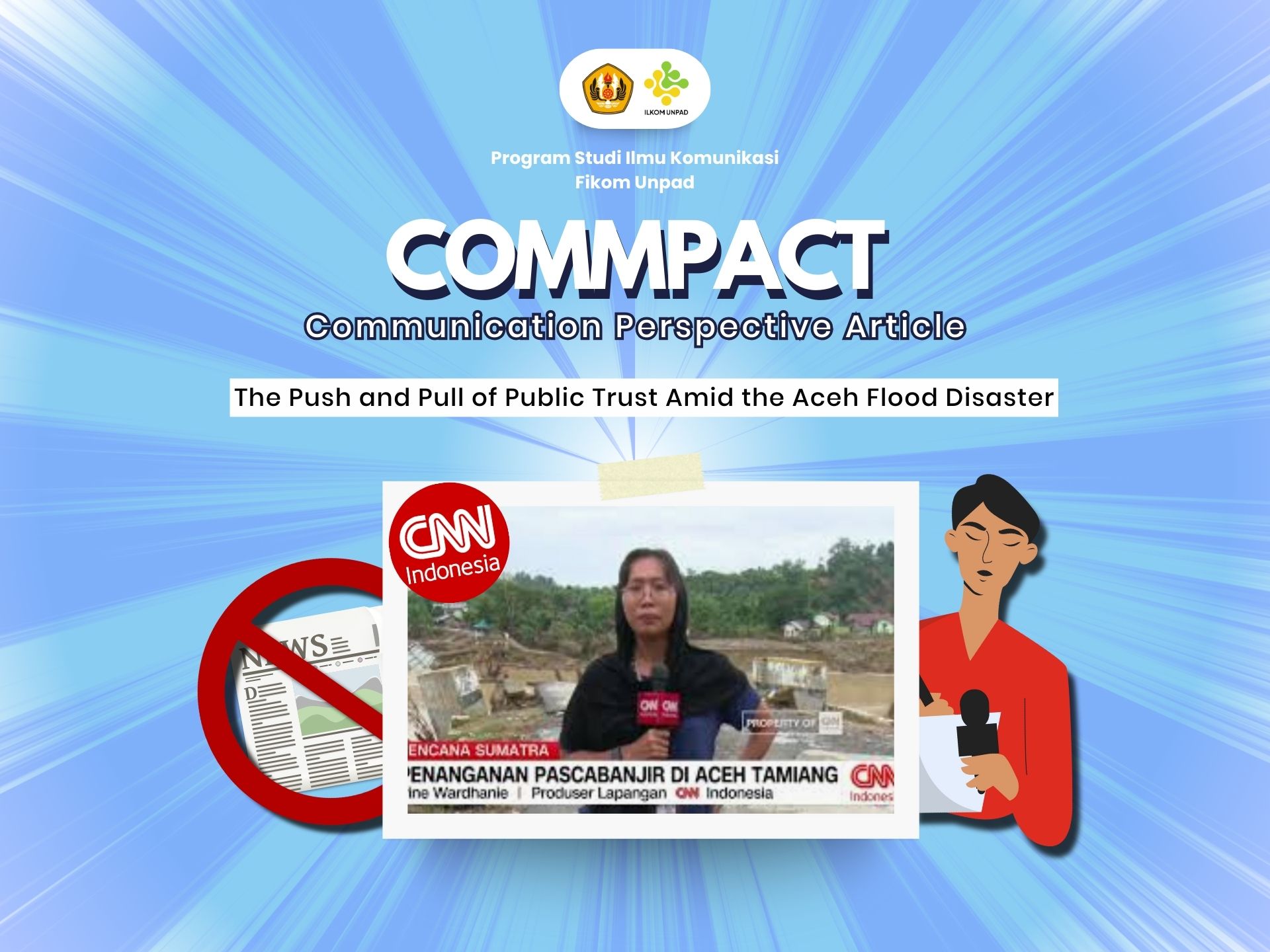
One news video produced by CNN Indonesia drew significant public attention after it circulated widely on social media. In the video, the reporter conveyed field conditions using an emotional approach, emphasizing that many affected residents had yet to receive basic assistance such as food and logistical access. Implicitly, the report highlighted a gap between the government’s official narrative regarding disaster management and the realities experienced by victims on the ground. Shortly after going viral, the video was removed following an internal editorial decision by CNN, reportedly to prevent the formation of a particular framing.
In mass communication studies, framing is understood as the process of selecting and emphasizing certain aspects of an event to shape public interpretation (Eriyanto, 2002). Nevertheless, CNN did not provide further explanation regarding the specific framing context in question. As a result, rather than generating a positive response, this action strengthened public discourse surrounding power relations between the media, the state, and society. Many members of the public perceived that CNN was under pressure from certain parties to withdraw the video footage.
The removal of the content can be examined through the concept of media oligarchy, a condition in which ownership and management of mass media are concentrated among a small group with specific economic and political interests (Dahlia and Permana, 2022). Under this framework, the media are viewed as not fully functioning as free and neutral public spheres, as they are positioned to continually negotiate editorial policies within broader power relations. The case of the removed news video demonstrates the media’s dual potential role. On one hand, the media serve as a platform to voice the suffering of communities affected by disasters. On the other hand, the decision to remove the coverage reflects perceptions of the media as neither neutral nor independent.
Reflecting on this discourse, every editorial decision, including content removal, must be carefully considered by media institutions. Such decisions can have direct implications for the level of public trust in the media as credible information providers. In the context of humanitarian crises, the media are expected to maintain a balance between editorial considerations and social responsibility. By doing so, the media can sustain their role as a pillar of public communication that is critical, independent, and trustworthy. This expectation aligns with the Sustainable Development Goals, particularly Goal 16 on Peace, Justice, and Strong Institutions, which emphasizes the importance of transparent, accountable, and responsive institutions that serve the public interest.
References:
CNN Indonesia. (2025, Desember). [Unggahan video terkait penanganan banjir]. Instagram.
https://www.instagram.com/p/DSbjwankjAt/
Dahlia, R. R., & Permana, P. A. (2022). Oligarki Media dalam Pusaran Pemilihan Presiden dan Wakil Presiden Republik Indonesia 2019 Menuju 2024. POLITICOS: Jurnal Politik Dan Pemerintahan, 2(1), 65–81. https://doi.org/10.22225/politicos.2.1.2022.65-81
Eriyanto. (2002). Analisis Framing: Konstruksi, Ideologi dan Politik Media. Yogyakarta. Lkis
Harian Aceh. (2025, Desember 19). Footage video CNN terkait penanganan banjir Aceh dihapus YouTube, ada apa? https://www.harianaceh.co.id/en/2025/12/19/footage-video-cnn-terkait-penanganan-banjir-aceh-dihapus-youtube-ada-apa/
Kabereh News. (2025). CNN Indonesia bantah tarik laporan.
https://www.kaberehnews.com/2025/12/cnn-indonesia-bantah-tarik-laporan.html
Communication Perspective Article Vol #10