
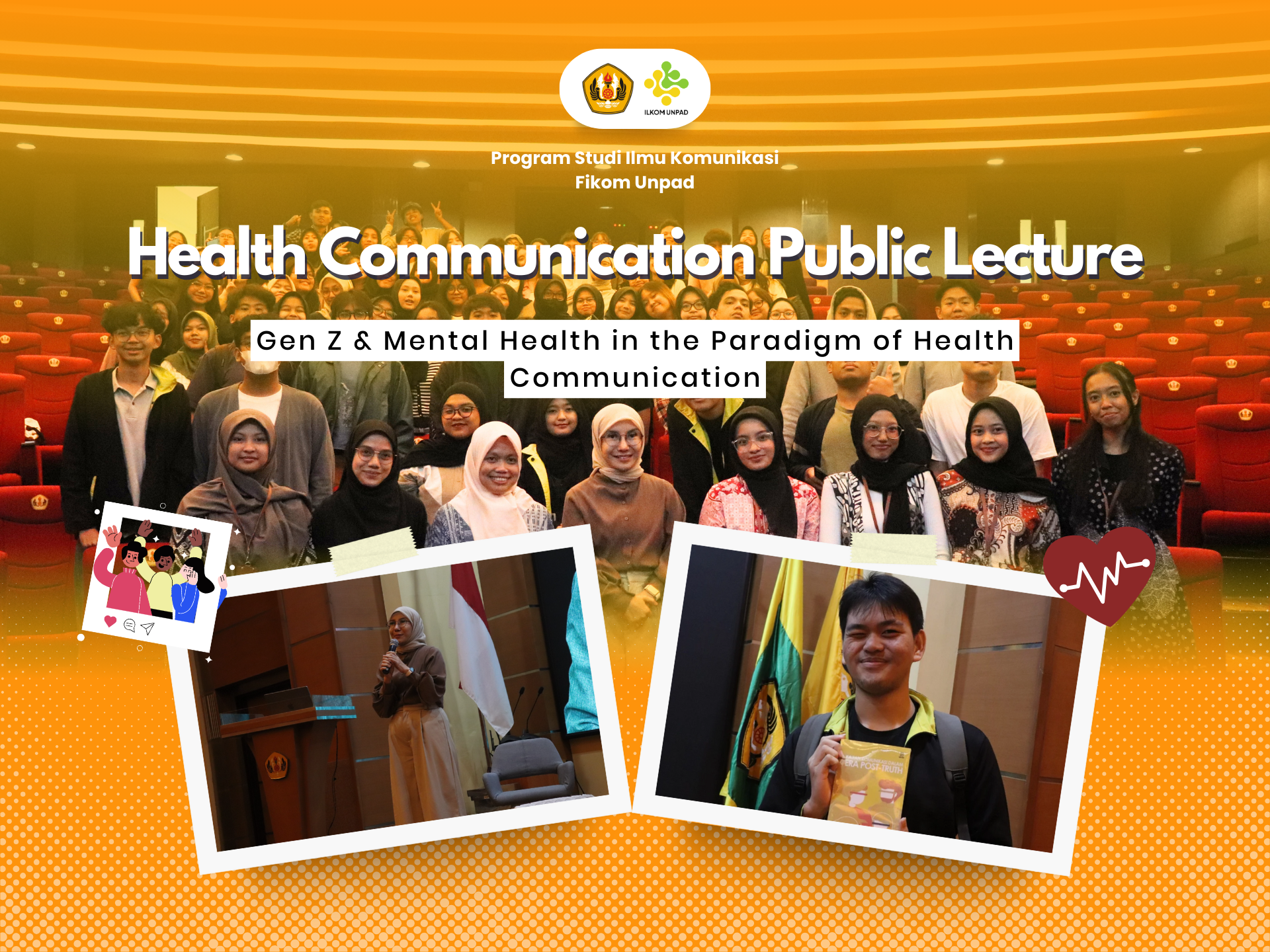
On September 12, 2025, the Communication Studies Program of Universitas Padjadjaran held a public lecture titled “Gen-Z & Mental Health in the Health Communication Paradigm.” The event featured Dr. Hera Laxmi Devi Septiani, CPC, CGC, CTC, or more familiarly known as Coach Devi, as the keynote speaker.
The session opened with warm interaction between Coach Devi and the students, as she invited participants to share the factors that had recently caused them stress. This moment sparked an honest and reflective conversation about the challenges faced by Gen Z in maintaining their mental health.
In her presentation, Coach Devi emphasized that mental health issues have become a major concern, as Gen Z represents the largest demographic group in Indonesia and is currently in a transitional phase of life. “Mental health problems are now the second leading condition affecting the quality of life of adolescents globally,” she stated.
Coach Devi also highlighted several triggers of mental health problems among Gen Z, ranging from digital exposure such as body shaming, flexing, FOMO, doom scrolling, to fear of failure. The resulting mental health disorders are varied, including eating disorders, PTSD, sleep disorders, and self-harm. According to the data she presented, mental health issues among Gen Z have increased by as much as 200%.
Within the context of health communication, Coach Devi stressed the importance of starting conversations, reducing stigma, and sharing accurate and relevant information. “Communication practitioners are not therapists. Their role is to educate, advocate, and raise awareness so that Gen Z is willing to seek professional help,” she explained.
This public lecture aligns with the United Nations Sustainable Development Goal (SDG) 3.4, which aims to promote mental health and well-being globally through prevention, care, and health education. Fikom Unpad students are encouraged to contribute actively by maximizing their roles as communicators, information disseminators, and drivers of mental health campaigns. Through critical digital literacy, the sharing of accurate information, and sustained advocacy, students can help reduce stigma, encourage peers to seek professional help, and foster a psychologically healthy academic environment. These efforts represent a concrete step in supporting the achievement of SDG 3.4 both within the campus and in the broader community.