
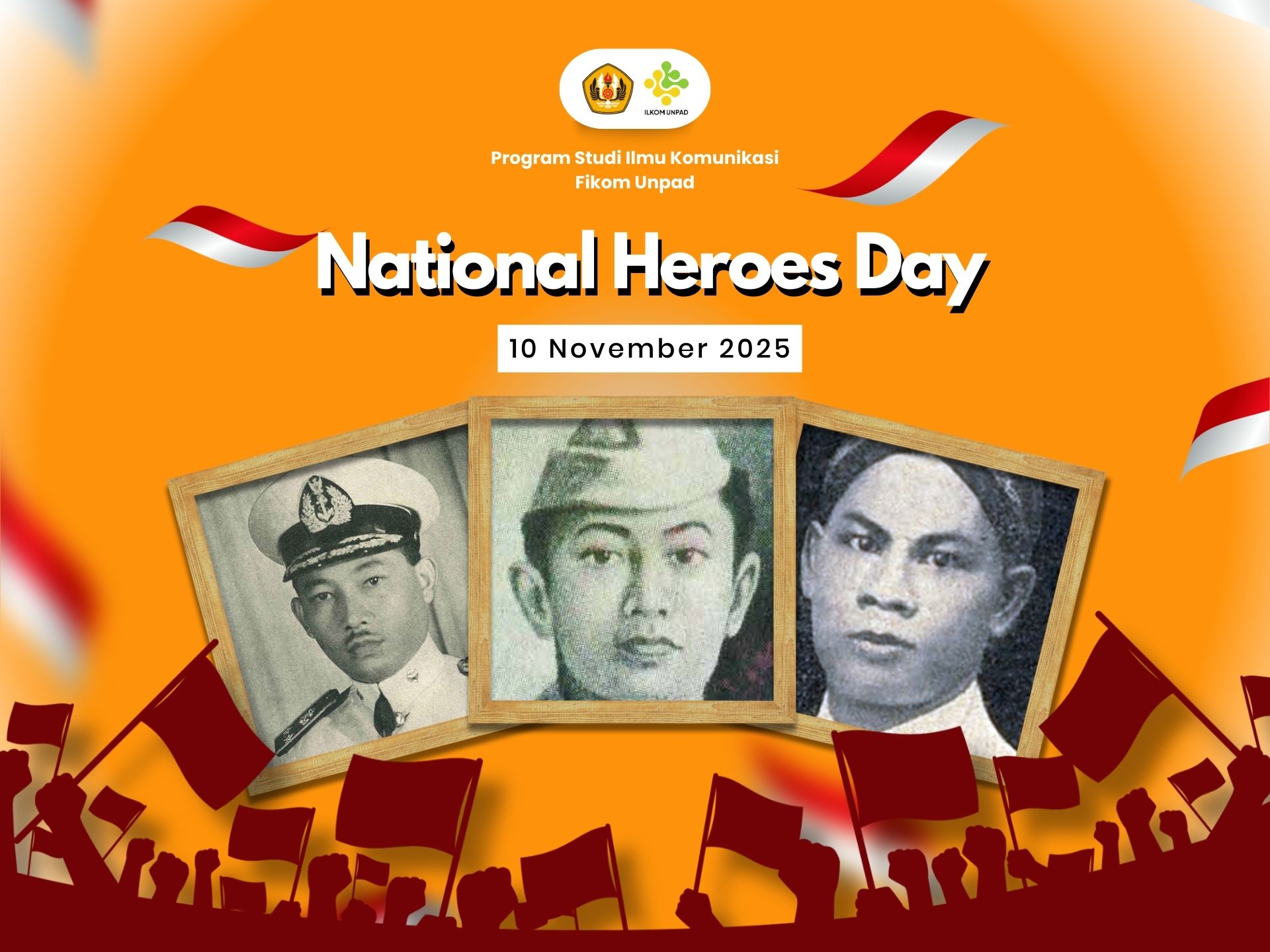
Every year on November 10, the Indonesian people commemorate Heroes Day as a form of respect for those who fought and sacrificed for independence. This commemoration is not merely an annual agenda but also a moment to reflect on the values of struggle that laid the foundation of the nation. The spirit of honoring heroes is also reflected in everyday life, for instance through the naming of streets, monuments, and government buildings after their names. These markers serve not only as reminders of history but also as symbols that the spirit and sacrifice of the heroes continue to live on within society today.
Bandung, as one of the most important cities in Indonesia’s history, also holds many traces of meaningful struggles. Behind its modern and dynamic character, the city preserves deep-rooted values of heroism within the collective memory of its people. Interestingly, some of the heroes whose names are immortalized as street names in Bandung may not always receive national attention, yet they hold deep meaning for local residents. Among these are Mohammad Toha, Admiral R.E. Martadinata, and Otto Iskandar Dinata, three figures whose stories of struggle have become inseparable from the historical identity of Bandung.
Mohammad Toha
The name Mohammad Toha is deeply embedded in Bandung’s history as a symbol of selfless courage. He is remembered as one of the key figures in the 1946 Bandung Lautan Api (Sea of Fire) incident, when the people of Bandung burned down their own city to prevent it from falling into the hands of the Dutch. Still a young man at the time, Toha carried explosives into an Allied ammunition warehouse in Dayeuhkolot and detonated them along with himself. This act became a symbol of total sacrifice for independence.
Today, Mohammad Toha Street in South Bandung stands as a lasting reminder of patriotism and the extraordinary bravery of a young man who chose death over surrendering the dignity of his city.
Admiral R.E. Martadinata
Unlike Mohammad Toha, Admiral Raden Eddy Martadinata’s name is more often associated with Indonesia’s maritime defense. Even so, he also had a strong connection to West Java. Born in Bandung on March 29, 1921, Martadinata grew up amid the injustices of the colonial era. After Indonesia gained independence, he joined the Navy and became one of the most influential officers in the early years of the Republic.
As Chief of Staff of the Indonesian Navy, Martadinata was known for his unwavering commitment to defending the country’s maritime sovereignty. He died in a helicopter crash in 1966, and his service to the nation is commemorated through the naming of the warship KRI R.E. Martadinata and a major street in East Bandung. This street is not merely a route of transportation but also a symbol of Indonesia’s determination to protect its territorial waters.
Otto Iskandar Dinata
This hero is known by the nickname “Si Jalak Harupat,” which reflects his brave and outspoken nature in fighting for justice. Otto Iskandar Dinata was born in Bojongsoang, Bandung, and was active in several nationalist organizations, including Paguyuban Pasundan and the Volksraad. After independence, he served as a State Minister in the first cabinet of the Republic of Indonesia.
However, his life ended tragically. He was kidnapped and killed in late 1945, and his body has never been found. Despite this, the name Otto Iskandar Dinata continues to live on-not only as the name of a main road connecting Bandung and Soreang but also as a symbol of idealism and moral courage in the face of injustice.
Through street names such as Mohammad Toha, R.E. Martadinata, and Otto Iskandar Dinata, we are reminded that history does not only live in textbooks. It also exists in the urban spaces we pass through every day. Each street name carries a story of struggle and values that shape the collective identity of Bandung’s people. Remembering and understanding their meanings is not merely an act of respect but also part of an effort to preserve the city’s cultural and historical continuity. In this way, the spirit of Heroes Day aligns with Sustainable Development Goal (SDG) 11: Sustainable Cities and Communities, which aims to create inclusive, identity-rich, and human-centered living spaces rooted in the nation’s history.
Reference:
Adryamarthanino, V. (2021). Raden Eddy Martadinata: Kiprah, Perjuangan, dan Karier Militer (N. N. Nailufar, Ed.). KOMPAS.com; Kompas.com. https://www.kompas.com/stori/read/2021/06/22/090000879/raden-eddy-martadinata–kiprah-perjuangan-dan-karier-militer
Herlambang, M. L., Kurniawati, K., & Martini, S. (2021). PERAN MOHAMMAD TOHA PADA PERISTIWA BANDOENG LAOETAN API TAHUN 1945-1946. Historiography, 1(2), 156–156. https://doi.org/10.17977/um081v1i22021p156-170
Pangestuti, Y. K. R. (2024). Kenapa Oto Iskandar di Nata Dijuluki Si Jalak Harupat? (W. L. Ningsih, Ed.). KOMPAS.com; Kompas.com. https://www.kompas.com/stori/read/2024/05/12/170000979/kenapa-oto-iskandar-di-nata-dijuluki-si-jalak-harupat-