
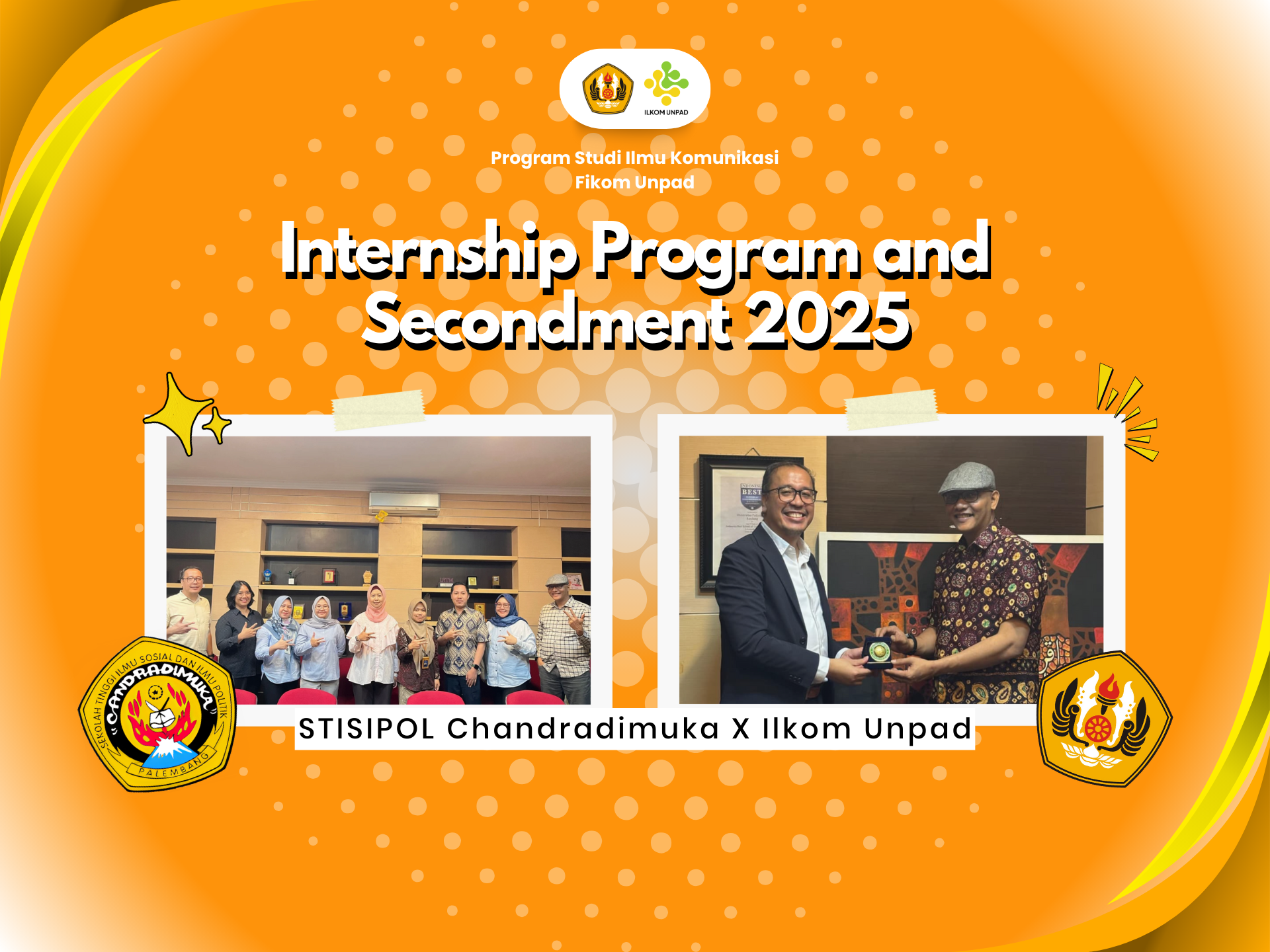
In October 2025, the Communication Sciences Studies Programme at Universitas Padjadjaran (Unpad) welcomed a delegation from STISIPOL Candradimuka Palembang as part of the 2025 Internship and Secondment Program. This initiative is part of a grant from the Ministry of Higher Education, Science, and Technology (Kemendikbudristek) awarded to selected universities across Indonesia, with STISIPOL Candradimuka being one of the recipients.
The visit took place over six days, from October 6–11, 2025, aimed at deepening understanding and sharing best practices in the implementation of the Tri Dharma of Higher Education: Education, Research, and Community Service. The STISIPOL Candradimuka delegation consisted of Dr. Budi Santoso, M.Comn as Program Leader; Suhendra, M.I.Kom as a representative of the Communication Science Department; Wiwit Octaviani, M.Kom as Head of the Bureau of Academic and Information Systems; Filisa Octary, M.Kom as Head of the Bureau of General Affairs and Technology Resources; and Dita Mayreista, S.H., M.H. from the Quality Assurance Office.
According to Dr. Budi Santoso, an alumnus of the Faculty of Communication Sciences (Fikom) Unpad, the choice of Unpad’s Communication Sciences Studies Programme as a partner institution was based on its strong academic reputation and proven track record at both national and international levels.
Throughout the visit, the STISIPOL Candradimuka delegation observed various academic practices, ranging from the implementation of the Tri Dharma principles, academic information systems, to the vibrant student culture at Ilkom Unpad. Dita Mayreista highlighted the “more dynamic and immersive” academic atmosphere, while Suhendra expressed his appreciation for the diversity of students, reflecting the unique character of Ilkom Unpad as a faculty with a broad foundation in communication studies.
One of the key areas that drew the delegation’s attention was the integrated academic information system implemented at Ilkom Unpad. Wiwit Octaviani shared her admiration for the system managing faculty research, community service, and student innovation programs (PKM), as explained by Saepudin Zohari, S.Mn., M.I.Kom, Secretary of the Study Program. She noted that the information provided would be highly beneficial for STISIPOL Candradimuka in developing a similar system within their own institution.
Dr. Kunto Adi Wibowo, M.Si., Head of the Communication Sciences Studies Programme at Unpad, explained that communication with STISIPOL Candradimuka regarding this program had been established two months prior. “We warmly welcome this collaboration, as it allows mutual learning between institutions. Not only does STISIPOL learn from Unpad, but we also gain valuable insights into the challenges faced by other universities, such as study program marketing strategies and class schedule flexibility,” he said.
From the perspective of information system management, Saepudin added that Ilkom Unpad continues to develop its Integrated Academic Information System (SIAT) based on the principles of excellent service, data security, and digital efficiency. The system includes an e-office platform for submitting official letters with digital signatures and is integrated with Google Apps for Education (GAFE), providing up to two terabytes of storage for all academic community members.
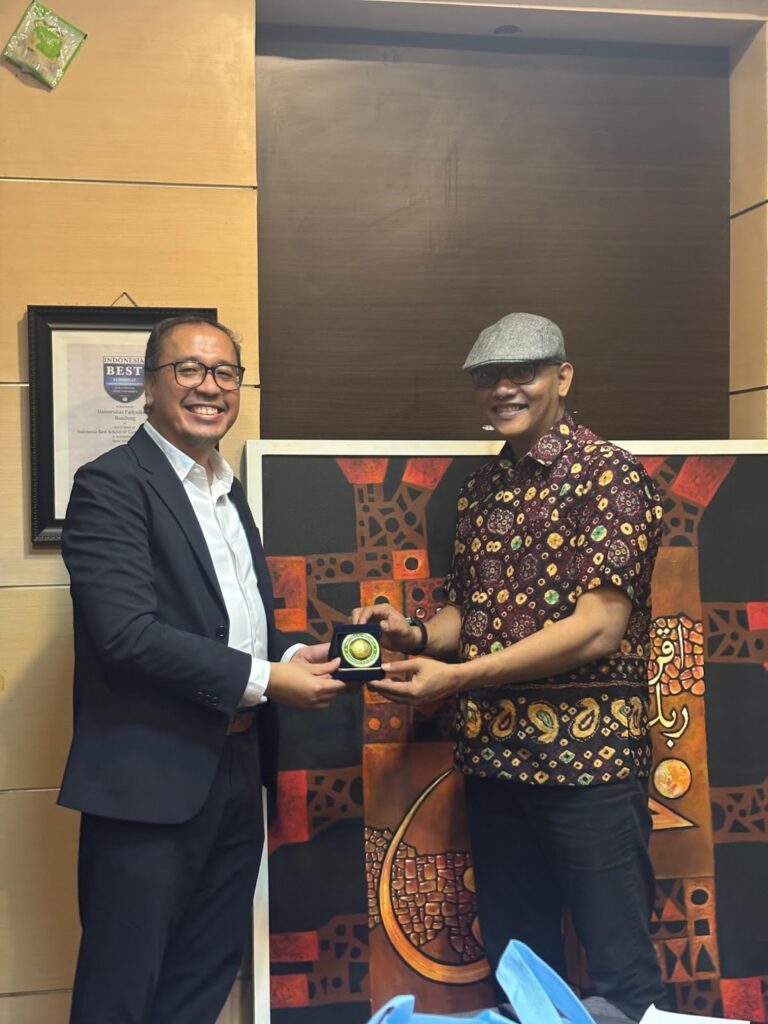
As the closing agenda of the visit, an official plaque handover ceremony and collaboration discussion session were held between Unpad’s Communication Sciences Studies Programme and STISIPOL Candradimuka on October 10, 2025. The plaque exchange served as a symbol of appreciation and a commitment to strengthening institutional partnerships.
The 2025 Internship and Secondment Program between Ilkom Unpad and STISIPOL Candradimuka also supports the achievement of the Sustainable Development Goals (SDGs), particularly Goal 4: Quality Education and Goal 17: Partnerships for the Goals. This inter-institutional collaboration is expected to not only enhance academic capacity and university governance but also serve as a tangible step toward building a higher education ecosystem that is sustainable, inclusive, and adaptive to the evolving times.