
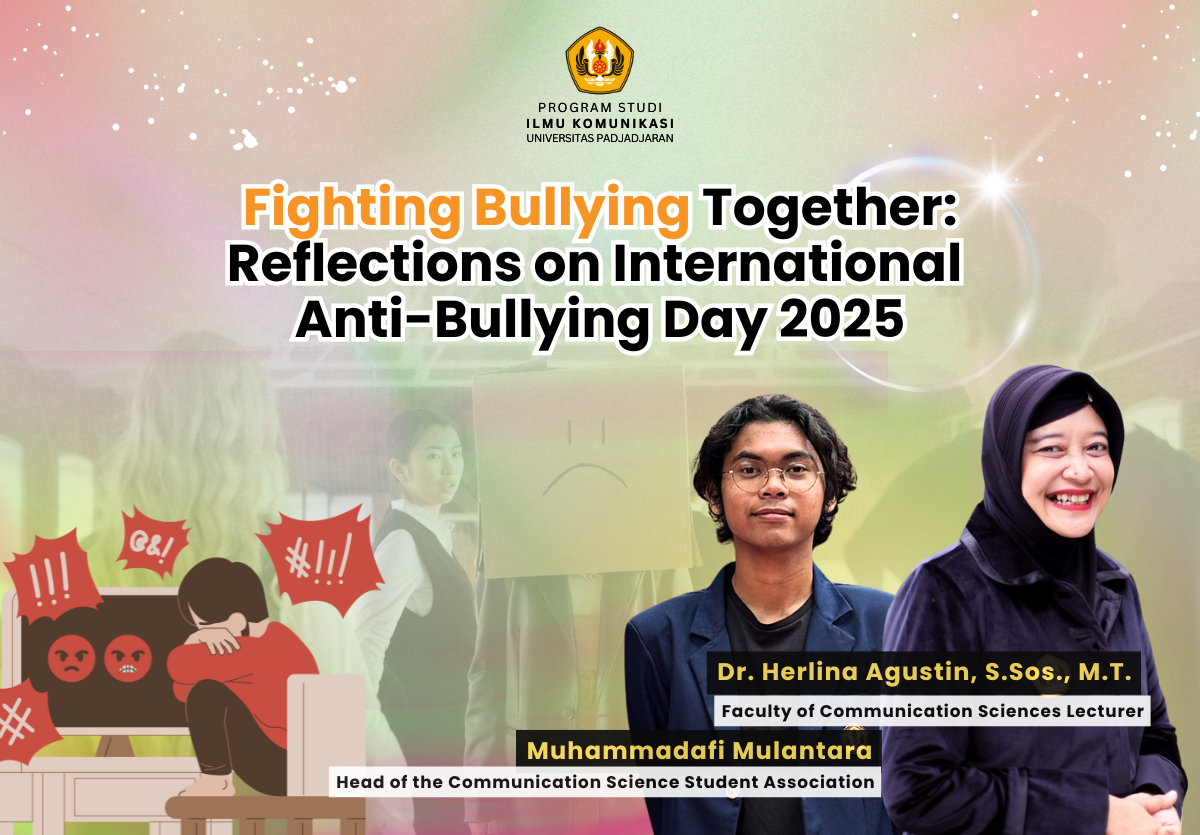
On February 23, the world commemorated International Anti-Bullying Day to raise awareness of the devastating effects of bullying. This phenomenon can affect a person’s mental and physical well-being in the long run. Bullying is physical, verbal and digital. Cyberbullying is becoming more prevalent as the use of social media increases. A UNICEF report showed that one in three adolescents experience online bullying. International Anti-Bullying Day is an invitation for us to raise awareness through education and campaigns so that society does not normalize violence. Schools and workplaces should have anti-bullying policies and inclusive cultures. Support from family and community is very important so that victims feel safe to report.
Dr. Herlina Agustin, S.Sos., M.T., a lecturer at the Faculty of Communication Sciences, gave her response regarding the phenomenon of bullying in Indonesia. According to her, bullying cases in Indonesia are not just cases that occur at one time, but are structural and even become a tradition. Bullying can occur anywhere, such as in the family environment, schools, neighbors, even the work environment. This is what makes bullying cases in Indonesia so high.
Herlina considered that the law in Indonesia is still blunt about bullying cases. There are still many cases of reporting bullying that ultimately make the victim a suspect due to self-defense. In addition, there are still many cases that are resolved with “family” terms, even though punishment is important to create a deterrent effect. “Generally, these bullies are usually insecure people when viewed from social psychology. Supposedly, to eradicate bullying cases, there needs to be a deeper analysis through a psychological approach, for both perpetrators and victims. It’s not just about peace,” she concluded.
Besides Herlina who is an academic, there is also Muhammadafi Mulantara who is the head of the Communication Science Student Association (HIMA Ilkom). Afi gave his response regarding bullying in Indonesia. For him, bullying is not only about violence, but also about attitude and words. Just being “silent treatment” or “gossiping” is also included in the bullying chain. This should be eradicated at this time. Therefore, the Communication Science Student Association is committed to supporting the eradication of bullying through various programs, one of which is creating an inclusive culture for all Communication Science students.
Together Herlina and Afi hoped on this International Anti-Bullying Day to invite all parties to eradicate bullying in Indonesia. They also advised all victims to rise up and dare to speak out. This International Anti-Bullying Day reminds us that every individual plays a role in creating a safer and more inclusive environment. With awareness and action, we can eradicate the culture of bullying and build a world that respects one another. (Ed)