
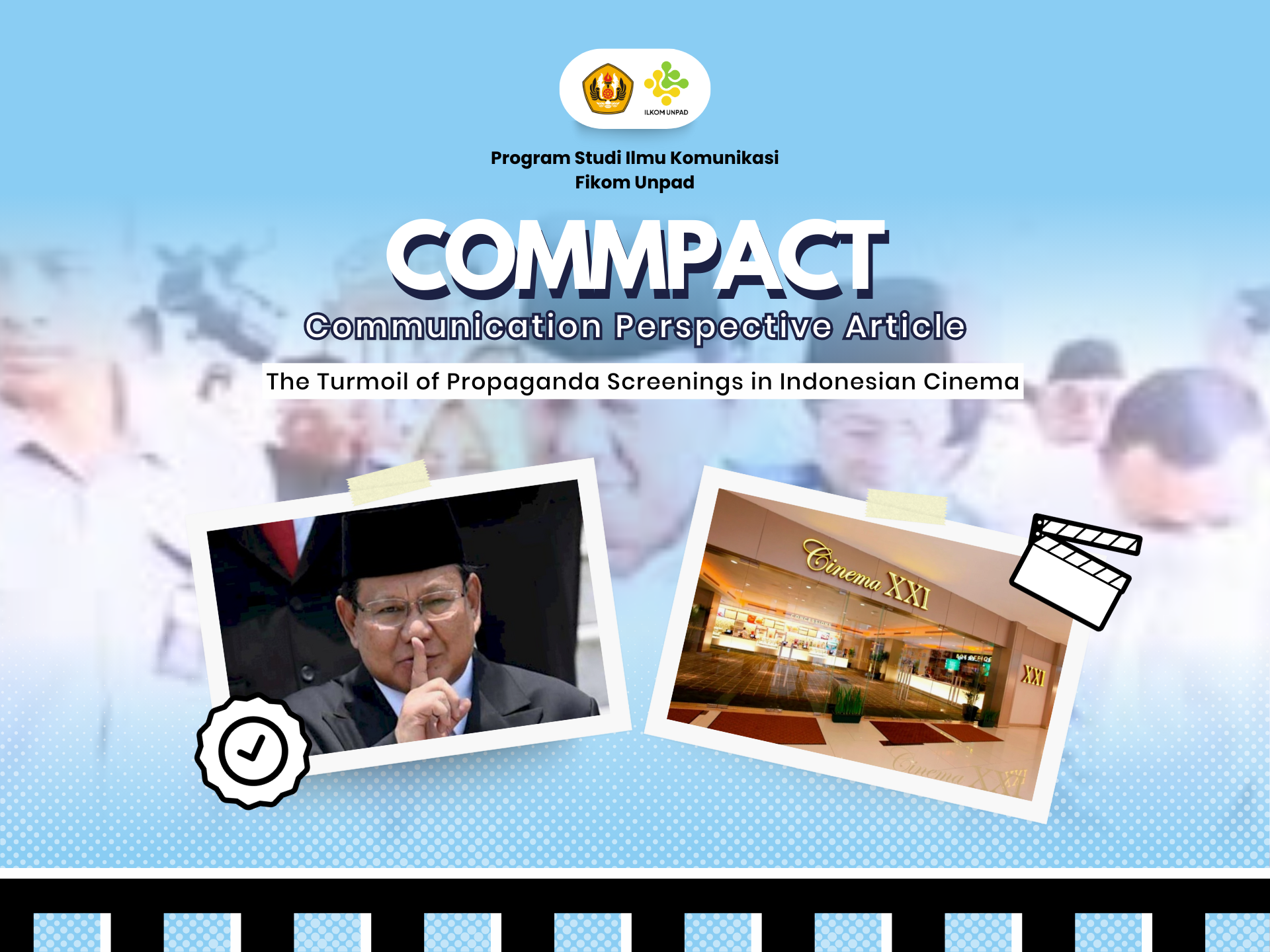
No one expected that the screening of a short video before feature films in theaters would stir public uproar in Indonesia. From September 9 to 14, Cinema XXI showed a video highlighting Prabowo Subianto’s achievements right before movies began. The video, presented in a newsreel format, showcased his programs and accomplishments to date. One of the highlights was the Free Nutritious Meal (MBG) Program, which reportedly reached 20 million beneficiaries.
However, the screening quickly sparked questions among the public. Many drew parallels to the New Order era, though with different political actors involved. One netizen admitted they could not understand the urgency of showing such a video. Others criticized the move as inappropriate and unsuitable for an entertainment space like a cinema. Similarly, some viewers expressed frustration at being “forced” to watch the video since, unlike YouTube, there was no option to skip the ad (BBC Indonesia, 2025).
Responding to the controversy, Indah Tri Wahyuni, Corporate Secretary of Cinema XXI, stated that the company does provide a platform for the government to disseminate public information in the form of public service announcements. In line with this, Meutya Hafid, Minister of Communication and Digital Affairs (Menkomdigi), defended the action as part of public communication and transparency, with the goal of informing citizens about the implementation of government programs to date (Nur, 2025).
Preciosa Alnashava Janitra, S.I.Kom., M.Si., a Communication Studies lecturer at Universitas Padjadjaran, also shared her perspective. She emphasized that cinemas are essentially entertainment spaces intended for audiences to relax. According to her, a non-skippable video format has the potential to create discomfort among viewers.
She also highlighted concerns over the efficiency of public spending. Shava noted that the costs incurred for broadcasting such public messages should be proportional to the benefits felt by society. This, she argued, underscores the importance of transparency and accountability in managing public communication budgets.
Furthermore, she pointed out that in conveying messages, the government should consider adopting more empathetic communication strategies. Rather than merely highlighting achievements, messaging could be more effective if paired with tangible performance improvements and greater sensitivity to public comfort. This way, cinemas can continue to serve as neutral spaces for audiences, without adding to the sense of fatigue amid ongoing political and social tensions.
From the perspective of media ethics, even though cinemas operate in a different context than the press, the principles of media ethics still apply, demanding that information be presented objectively, neutrally, and with consideration of diverse perspectives to maintain accuracy (Tilak, 2020).
Ultimately, the controversy over propaganda screenings in cinemas reflects the ongoing debate over the boundaries between entertainment spaces and public communication. It is therefore crucial for both the government and private sector to be more discerning in their choice of communication mediums. Upholding media ethics is key to ensuring that public communication remains effective while maintaining public trust.
References:
BBC News Indonesia. (2025, September 17). Video Presiden Prabowo tayang di bioskop – Apakah praktik Orde Baru hadir kembali? https://www.bbc.com/indonesia/articles/c8d715n0500o
Nur, M. F. (2025, September 16). Video Capaian Prabowo di Bioskop, Strategi Komunikasi Usang. Tirto.id; Tirto.id. https://tirto.id/video-capaian-prabowo-di-bioskop-strategi-komunikasi-usang-hhQm
Tilak, G. (2020, January 1). THE STUDY AND IMPORTANCE OF MEDIA ETHICS. https://www.researchgate.net/publication/349685937_THE_STUDY_AND_IMPORTANCE_OF_MEDIA_ETHICS?utm_source=chatgpt.com
Communication Perspective Article Vol #3