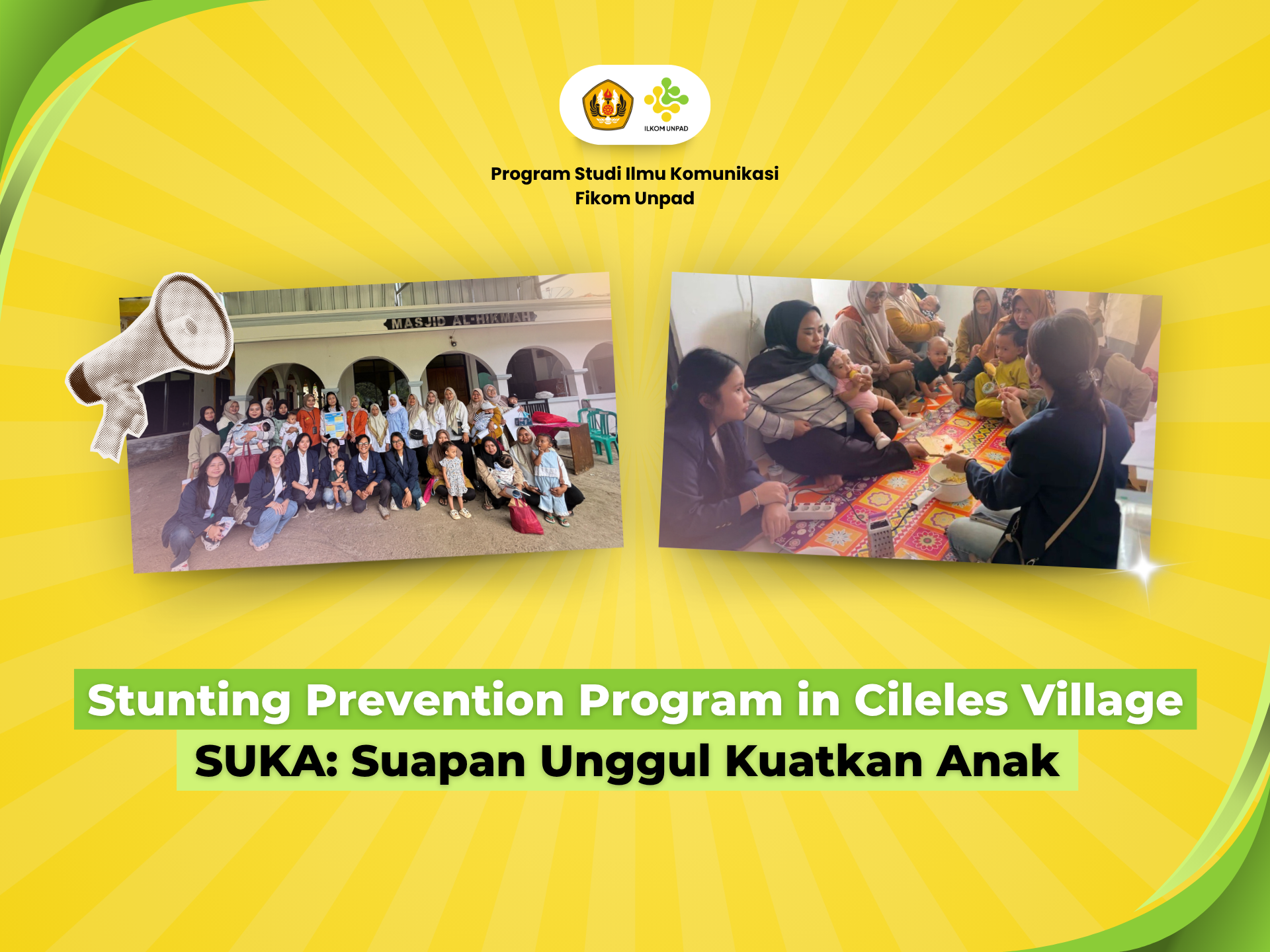
Stunting in children under two years old (BADUTA) is still a health challenge that requires joint attention, especially because the impact will be more difficult to overcome after the child passes the age of two. Responding to this challenge, Ilkom Unpad students initiated a complementary cooking demonstration activity entitled SUKA (Suapan Unggul Kuatkan Anak) which was held on June 6, 2026 at Posyandu RW 06, Cileles Village, Jatinangor District. This empowerment activity successfully attracted the participation of 11 clown mothers and caregivers, exceeding the initial target of 10 participants set to maintain the effectiveness of the learning and mentoring process.
As a form of practicum for the Empowerment Communication Course, the SUKA activity involving the Jatinangor Health Center targets Posyandu RW 06 as the area with the highest level of stunting risk in Cileles Village. This activity was also motivated by the importance of intervention during the first 1,000 days of children’s life (HPK) period. Through a participatory and interactive approach, students strive to provide education that is not only informative, but also easy to practice in daily life. This approach is expected to strengthen the role of families, especially mothers and caregivers, in ensuring optimal nutritional fulfillment of children from the early stages of life.
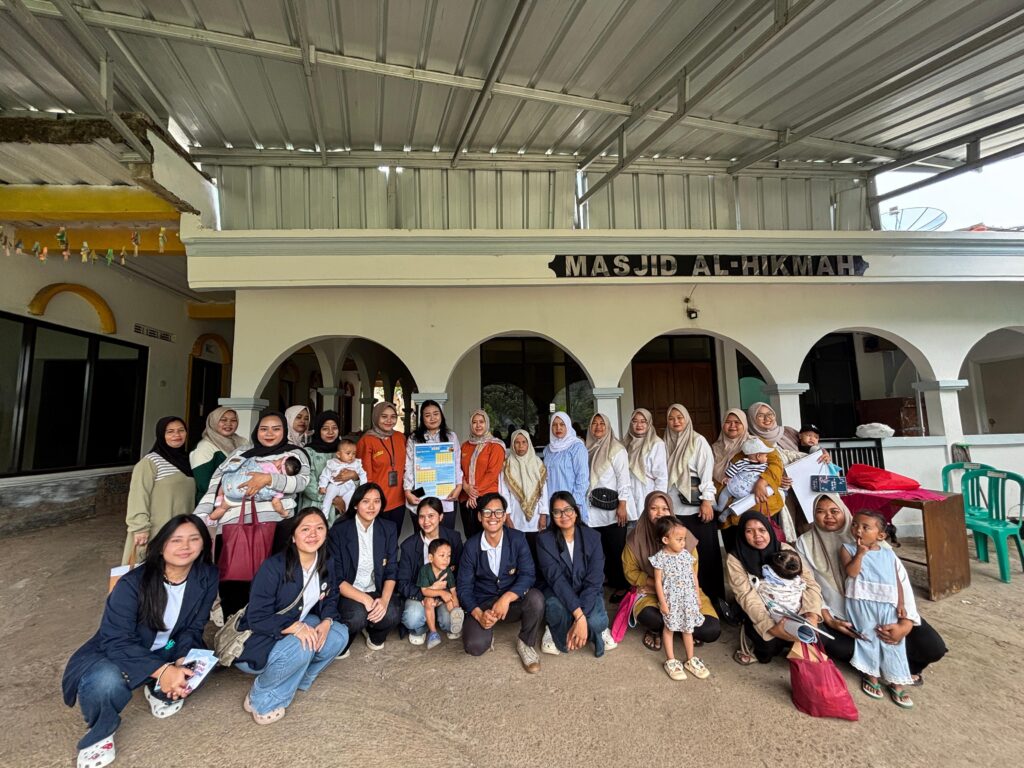
The series of activities began with the screening of a video of the Community Service Advertisement (ILM) produced by students, posyandu cadres, and midwives of the Jatinangor Health Center, so that the message conveyed was more relevant to the conditions of the local community. Through this video, participants received education about the importance of making nutritious complementary foods, proper parenting patterns, and the influence of the condition of SEZ (Chronic Energy Deficiency) of pregnant women on children. After the video screening, participants actively participated in a question and answer session to discuss various problems faced.
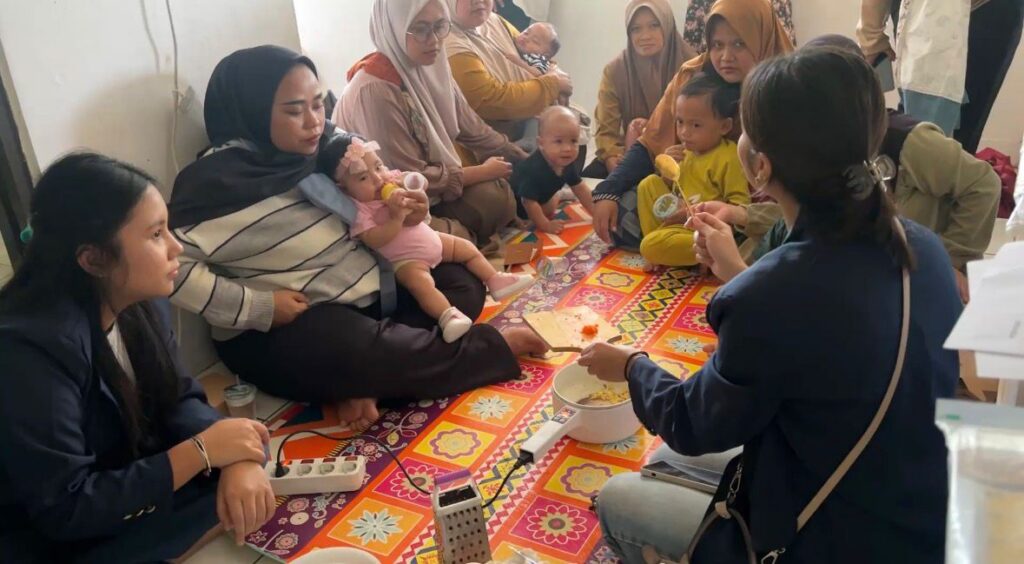
As the core of the activity, participants were then divided into groups to take part in an interactive complementary cooking demonstration guided directly by students. In this session, participants not only witnessed the process of making complementary foods, but also practiced each stage directly. The material provided includes making complementary foods based on three age groups, namely 6–8 months, 9–11 months, and 12–24 months. The enthusiasm of the participants was seen throughout the activity, where they actively asked questions, shared experiences, and discussed various challenges in meeting children’s nutritional needs at home.
In an effort to ensure the sustainability of the program, students also invited participants to take part in the challenge of making complementary foods for one week recorded on the tracker of student giving. This challenge is designed to encourage participants to apply the knowledge they have gained independently after the activity. In addition, participants also received an educational calendar that contains various nutritious complementary recipes as a practical guide that can be used at home. The activity was then closed with a documentation session and group photos between participants, posyandu cadres, accompanying lecturers, and students.
At the end of the event, one of the participants revealed, “This event was very memorable. I gained a lot of knowledge about good children’s nutritional intake and children’s development in the future. I always support activities like this because the event is very good,” said Mrs. Shelly. This activity emphasizes that practice-based education is able to provide a more real understanding and is easy to apply by the community in an effort to prevent stunting in clowns independently. Furthermore, SUKA’s activities show that collaboration between students, health workers, and the community can be a strategic step in strengthening collective awareness of stunting issues at the village level.