
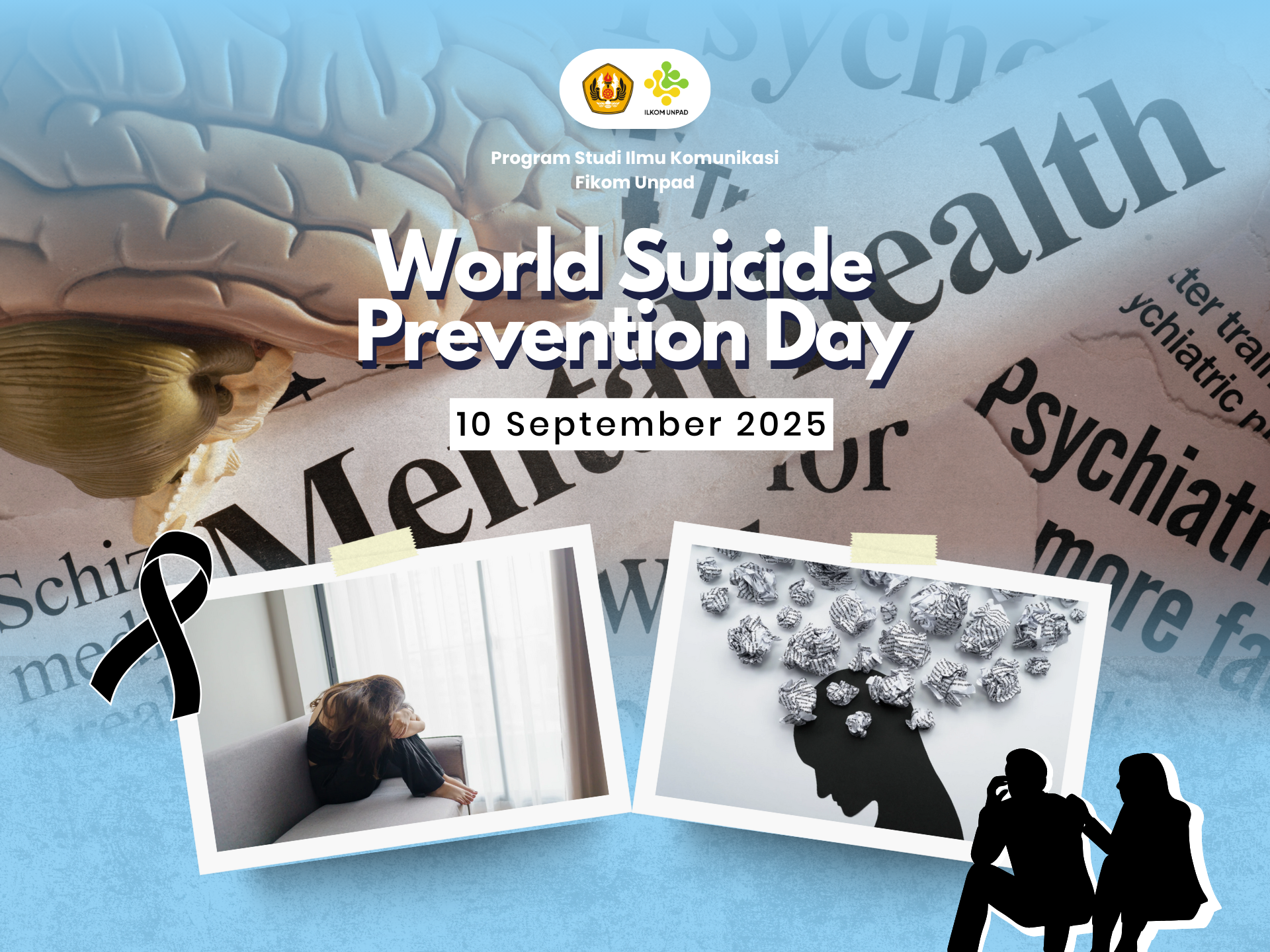
Every year on September 10, the world observes World Suicide Prevention Day as an important moment to raise awareness of mental health. In addition, this commemoration also emphasizes the importance of suicide prevention efforts on an international scale. Historically, the beginning of this day was initiated by the International Association for Suicide Prevention (IASP) in 2003. According to RRI (2025), the World Health Organization (WHO) has also strongly supported this initiative.
Suicide is neither an appropriate nor justifiable action under any circumstances. This is even more alarming considering the latest data, which shows a high and increasing rate of suicide both in Indonesia and globally. Editorindonesia (2025) reported that the National Criminal Information Center (Pusiknas) recorded 1,023 suicide cases in Indonesia between January and October 2024 (Editorindonesia, 2025).
World Suicide Prevention Day carries a different theme each year. RRI (2025) noted that the theme for 2024–2026 is “Changing the Narrative on Suicide.” The goal of this theme is to reduce stigma and encourage open conversations about suicide (RRI, 2025).
In line with this, the Communication Studies Program (Ilkom) also participates in efforts to reduce stigma surrounding suicide, strengthen prevention, and promote the importance of mental health education. The program will hold a public lecture entitled “Gen-Z & Mental Health in the Paradigm of Health Communication” with guest speaker Dr. Hera Laxmi Devi Septiani, CPC, CGC, CTC, on September 12, 2025, at the Postgraduate Auditorium, Faculty of Communication, Universitas Padjadjaran. This event is expected to serve as a platform for discussion and learning about mental health issues as well as suicide prevention strategies from a communication perspective.

The concrete steps taken by the Communication Studies Program in commemorating World Suicide Prevention Day are also in line with the Sustainable Development Goals (SDGs), specifically Goal 3: Good Health and Well-Being. This goal emphasizes the importance of ensuring healthy lives while promoting well-being for all people across different communities. Therefore, instead of viewing suicide from a perspective of blame, it is far better to foster compassion, empathy, and solidarity with one another.