
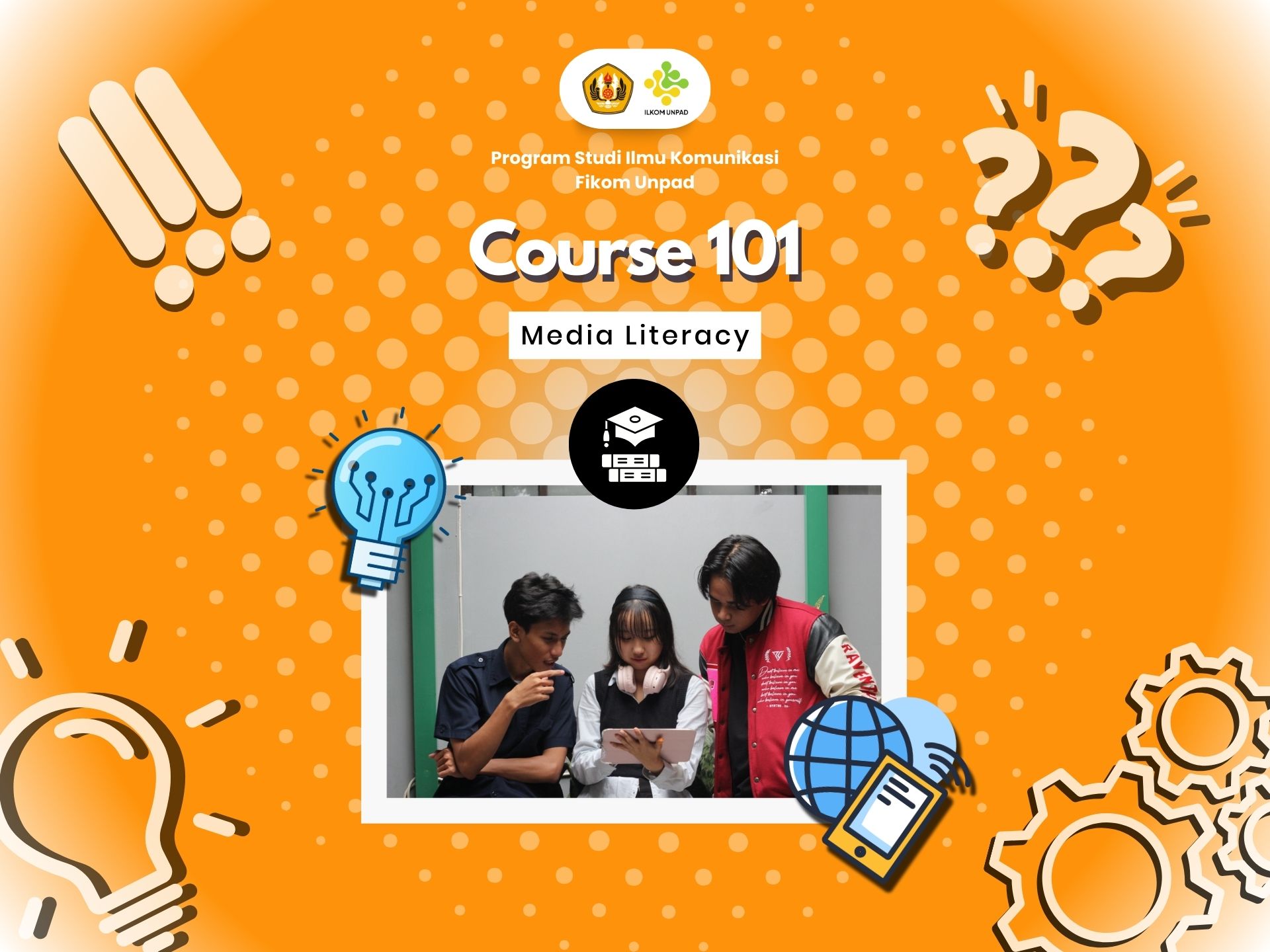
Hello, Ilkomers! For third-semester students of Communication Studies at Universitas Padjadjaran, Media Literacy is one of the essential courses you will encounter. However, this course is not merely about learning media theories. It is designed to equip students with practical skills so they can become more active and critical in navigating the increasingly complex media landscape. If you are curious about what Media Literacy is all about, let’s take a look at the explanation from Preciosa Alnashava Janitra, S.I.Kom., M.Si., one of the lecturers for this course.
What is the purpose of the Media Literacy course?
According to Preciosa, the main focus of the Media Literacy course is to develop media literacy as a skill rather than merely theoretical knowledge. Students are not only encouraged to understand media concepts, but also trained to access, analyze, and take action in response to media phenomena they encounter in their daily lives. Therefore, media literacy in this course is positioned as an essential life skill, especially amid the overwhelming flow of information and digital content in today’s world.
Are there any changes to the syllabus this year?
In general, the Semester Learning Plan (RPS) for Media Literacy is still based on the same main reference as in previous years, namely Media Literacy by W. James Potter (10th edition). In addition, the teaching team also uses a book by Renee Hobbs as a supporting reference. Updates are mainly made through enriched materials and more up-to-date examples used in class. Students are more frequently invited to analyze current media phenomena, ranging from entertainment content and news to advertisements. The material is also strengthened with recent data and cases, such as developments in the media and advertising industries in Indonesia. As a result, the learning process is designed to be more contextual and aligned with today’s media conditions.
How is the learning process conducted?
The Media Literacy course is designed with a strong emphasis on practice. Each meeting includes mini activities that encourage students to actively engage in discussions and analysis, covering audience analysis, content analysis, and discussions on the media industry. One example of such activities involves observing media consumption habits through social media platforms like Instagram Reels or TikTok. Students are asked to record the content that appears within a certain period of time and then discuss patterns and similarities among the content. This activity serves as an entry point to understanding algorithms, doomscrolling habits, and the current digital media environment.
In addition, the course also features an activity called LitMed Champ. LitMed Champ is designed to help students recall course material before the midterm exam (UTS) in a more interactive way. The activity begins by dividing the class into several groups, each tasked with reviewing previously covered material. Students then participate in a group-based game consisting of three rounds, with each round representing topics discussed before the midterm. A digital bell application is used to determine which group gets the chance to answer. After the group game session, students complete an individual quiz and fill out reflection and comprehension review forms via Google Form, which serve both as a learning readiness evaluation and as feedback for the teaching team.
What does the assessment look like?
For assessment, the midterm exam (UTS) is conducted in the form of written essays that emphasize analytical skills and cognitive understanding linked to media phenomena. Meanwhile, the final exam (UAS) does not take the form of a written test, but rather a final project. This project requires students to demonstrate their ability to access, analyze, create, and reflect on media phenomena through the analysis of a relevant and up-to-date film or television series. The outputs include an analytical report, infographics, and a presentation, accompanied by taking action in the form of recommendations for media literacy or media mediation programs. In this way, students are not only focused on analysis, but are also encouraged to produce contextual and applicable recommendations.
What skills are required?
The Media Literacy course emphasizes media literacy as a skill rather than merely theoretical understanding. Students are trained to observe and critically analyze media phenomena, understand the influence of media on society, and optimize positive impacts while mitigating negative ones.
According to Preciosa, media literacy is highly relevant to the professional world, especially in the field of communication. Skills such as observation, analysis, and content creation are fundamental competencies needed in various professions, ranging from content creators and media analysts to strategic communication practitioners. Beyond that, this course instills a sense of sustainability through the concept of pay it forward. Students are encouraged not only to become media-literate individuals themselves, but also to educate those around them to be more critical of media.
Ultimately, the Media Literacy course serves as an important foundation for Communication Studies students in facing the ever-evolving media landscape. With its critical, contextual, and applied approach, this course encourages students to become individuals who not only understand media, but are also able to contribute actively and responsibly in today’s digital society.
Course 101 Vol #8