
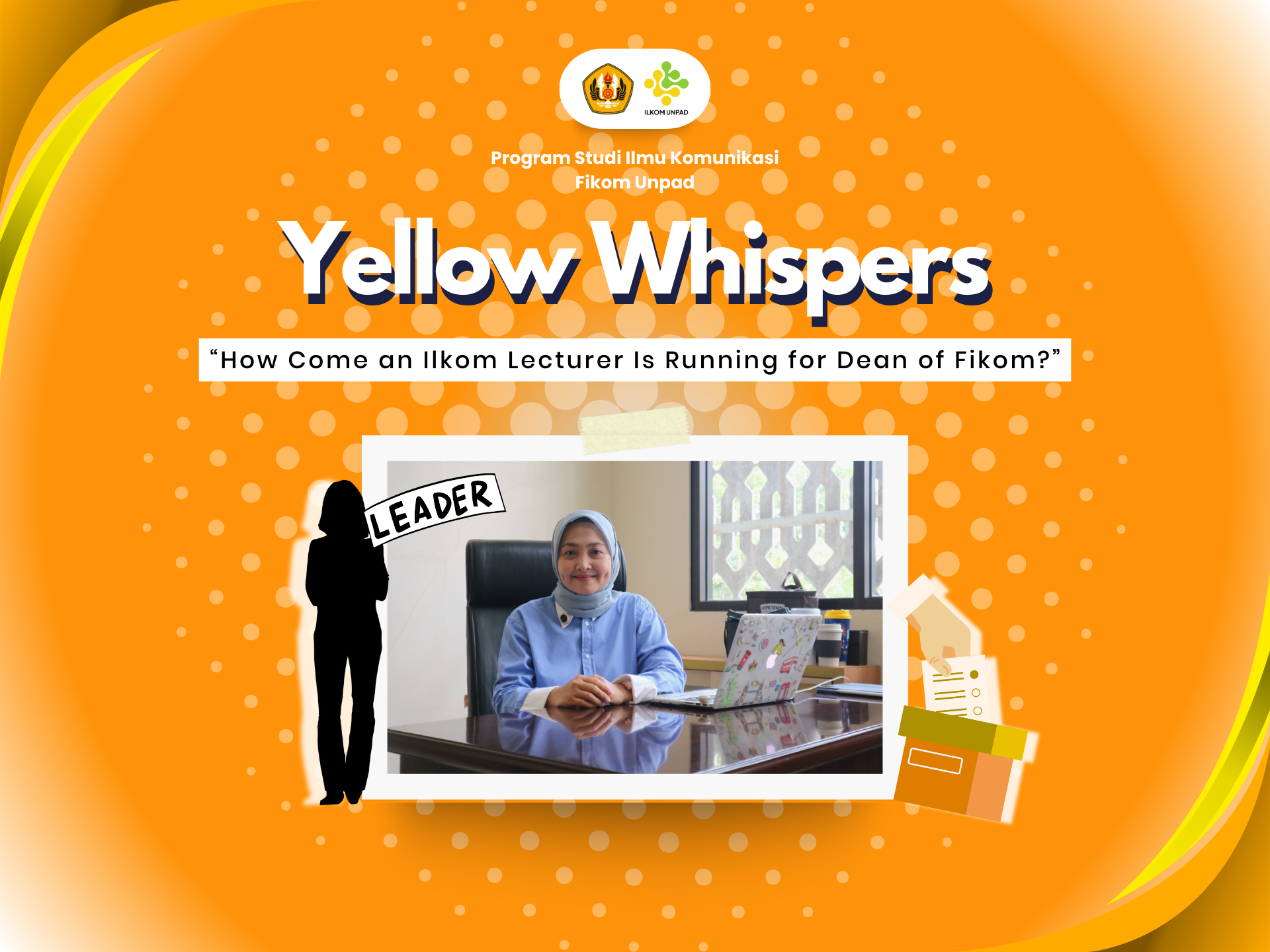
Hello, Ilkomers! The Faculty of Communication Sciences at Universitas Padjadjaran is preparing to elect a new dean. Interestingly, one of the lecturers from the Communication Science Program, Dr. Nindi Aristi, S.Sos., M.Comn., has decided to take part in the election. What inspired her to make this decision?
According to Nindi, there are two main factors behind her decision, namely internal and external motivations. Internally, her love for Fikom Unpad drives her commitment to build an agile faculty. This commitment is supported by excellent human resources and a strong reputation, which she believes can accelerate collaboration and create greater impact.
From an external perspective, Nindi sees Fikom as a “startup of ideas,” a space to share knowledge, experiences, stories, and challenges in order to create strategic collaboration, real solutions, and positive impact for society.
She also emphasizes the importance of developing human resource competencies within the faculty. According to her, lecturers and academic staff need space to enhance their skills and grow professionally, rather than being constantly occupied with administrative work. She believes that improving individual capacity will directly strengthen the image and reputation of Fikom as a whole.
In her candidacy, Nindi brings a strong vision to make Fikom excellent, inclusive, and impactful, in line with the vision of Universitas Padjadjaran. This vision is outlined through three main strategic pillars.
The first pillar, Academic and Service Excellence, focuses on the full implementation of the Outcome-Based Education (OBE) curriculum and improving academic services through the establishment of a Service Experience Center that can help address academic and non-academic issues quickly.
The second pillar, Human-Centered Environment, highlights the importance of work-life balance for lecturers, staff, and students. It emphasizes continuous training, fair reward systems, and the provision of additional professional certifications for students to strengthen their portfolios in the job market.
The third pillar, Updating Transformation, aims for transparency and good governance through the implementation of a digital, integrated, and participatory budgeting system. With this system, every unit within Fikom can access information about budget use openly and efficiently.
In line with this, Nindi’s vision and initiatives also support the achievement of the Sustainable Development Goals (SDGs), particularly SDG 4, Quality Education and SDG 16, Peace, Justice, and Strong Institutions. Through her commitment to enhancing the quality of learning and academic services, Fikom is expected to become an inclusive educational space that remains relevant to the needs of the times. Meanwhile, the implementation of a transparent and participatory digital governance system reflects an effort to strengthen accountability principles and foster an honest, open academic environment.
Through these three strategic pillars, Nindi hopes Fikom will continue to grow into a faculty that is excellent, inclusive, and impactful, not only at the national level but also internationally. She invites all members of the academic community to work together in building a Fikom that is progressive and relevant to the times.
The upcoming dean election is expected to open a new chapter for Fikom Unpad in facing future challenges. With renewed spirit and collaboration from the entire academic community, Fikom can continue moving forward and make an even greater impact. Best of luck to all the dean candidates.
Yellow Whispers Vol #5