
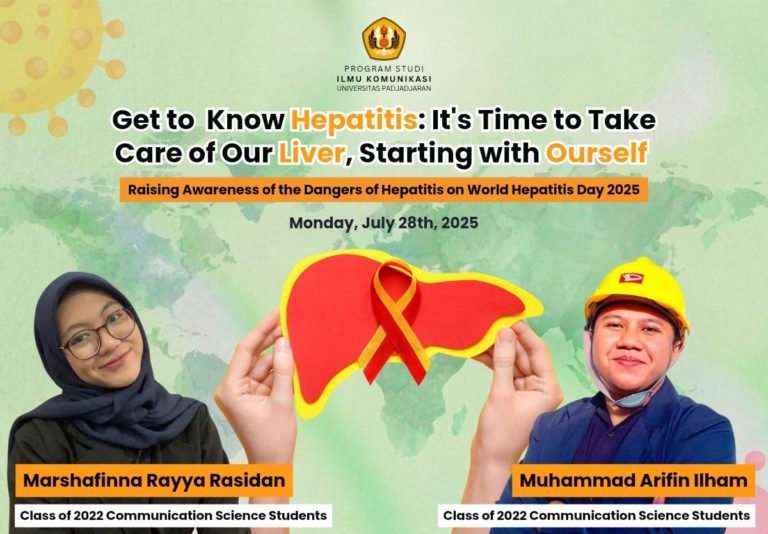
Every year on July 28th, the world commemorates World Hepatitis Day, a significant moment to raise public awareness about hepatitis. This disease is a liver inflammation caused by various factors, mainly viral infections. There are five types of hepatitis viruses: A, B, C, D, and E. Among them, hepatitis B and C are the most dangerous, as they can become chronic and lead to long-term liver damage such as cirrhosis and liver cancer.
Hepatitis is often referred to as a “silent killer” because its symptoms may go unnoticed for a long time. Many people only discover they have the disease once it has reached a severe stage. According to Rayya, a 2022 Communication Science student, hepatitis is a type of liver inflammation that can be caused by unhealthy lifestyles or viral infections. A common symptom is yellowing of the skin, which is why it is often called “yellow disease.” She emphasizes that like any other illness, hepatitis can lead to serious complications if not properly treated. Therefore, we must be more aware of this disease, especially as young people and students who sometimes forget that illness can strike at any time.
Hepatitis prevention is entirely possible. Getting vaccinated, maintaining proper food and drink hygiene, using sterilized medical equipment, and avoiding the sharing of needles or razors are effective ways to prevent transmission. In addition, education and early detection are crucial not only to raise awareness of the risks, but also to help people understand the actions needed to protect themselves and others.
In this context, university students particularly those studying Communication have an essential role to play. Arifin, another Communication Science student from the class of 2022, stated that students can contribute by communicating the causes, dangers, and impacts of hepatitis to help reduce its prevalence. As communication practitioners, he believes creating educational content such as photos and videos, is a practical step. Furthermore, conducting personal campaigns within their own communities can be an effective and meaningful approach.
Rayya also added that Communication Science students have been equipped with knowledge about health communication, which can be applied in real-life situations. By tailoring messages and choosing appropriate communication channels, students can disseminate important information and raise public awareness. This can be done through direct surroundings or expanded through social media and digital news platforms frequently accessed by the general public.
Through the commemoration of World Hepatitis Day, the Communication Science Study Programme at Universitas Padjadjaran invites all students and academic communities to take an active role in promoting education and prevention of hepatitis. Effective communication not only delivers information, but also builds awareness and collective concern. Taking care of our liver isn’t just a matter of emotions, but of health. Let’s start with ourselves, spread accurate information, and be part of the movement toward a healthier, hepatitis-free Indonesia. [Ed]