
As the end of 2025 approaches, Indonesia is once again stunned by the news of a disaster striking the western regions of the country. Since November 25, 2025, heavy rainfall accompanied by extreme weather has battered Aceh, North Sumatra, and West Sumatra. This resulted in massive flooding across various regencies and cities, destroying thousands of homes and forcing hundreds of thousands of residents to evacuate. According to data from the Badan Nasional Penanggulangan Bencana (BNPB) as of December 7, 2025, a total of 921 people have died, 392 are missing, and more than 975,000 residents have been displaced. The situation has quickly drawn widespread attention, especially from government officials who immediately visited the affected areas.
Ideally, the presence of government figures in disaster response efforts should provide both moral and material support to the public. Yet what unfolded was far from expected. Media coverage became dominated by criticism of the gestures, communication styles, and actions of several public figures deemed insensitive to the situation. Instead of displaying empathy, their actions appeared to be self-serving, as though their presence was aimed more at boosting personal image than helping citizens in distress.
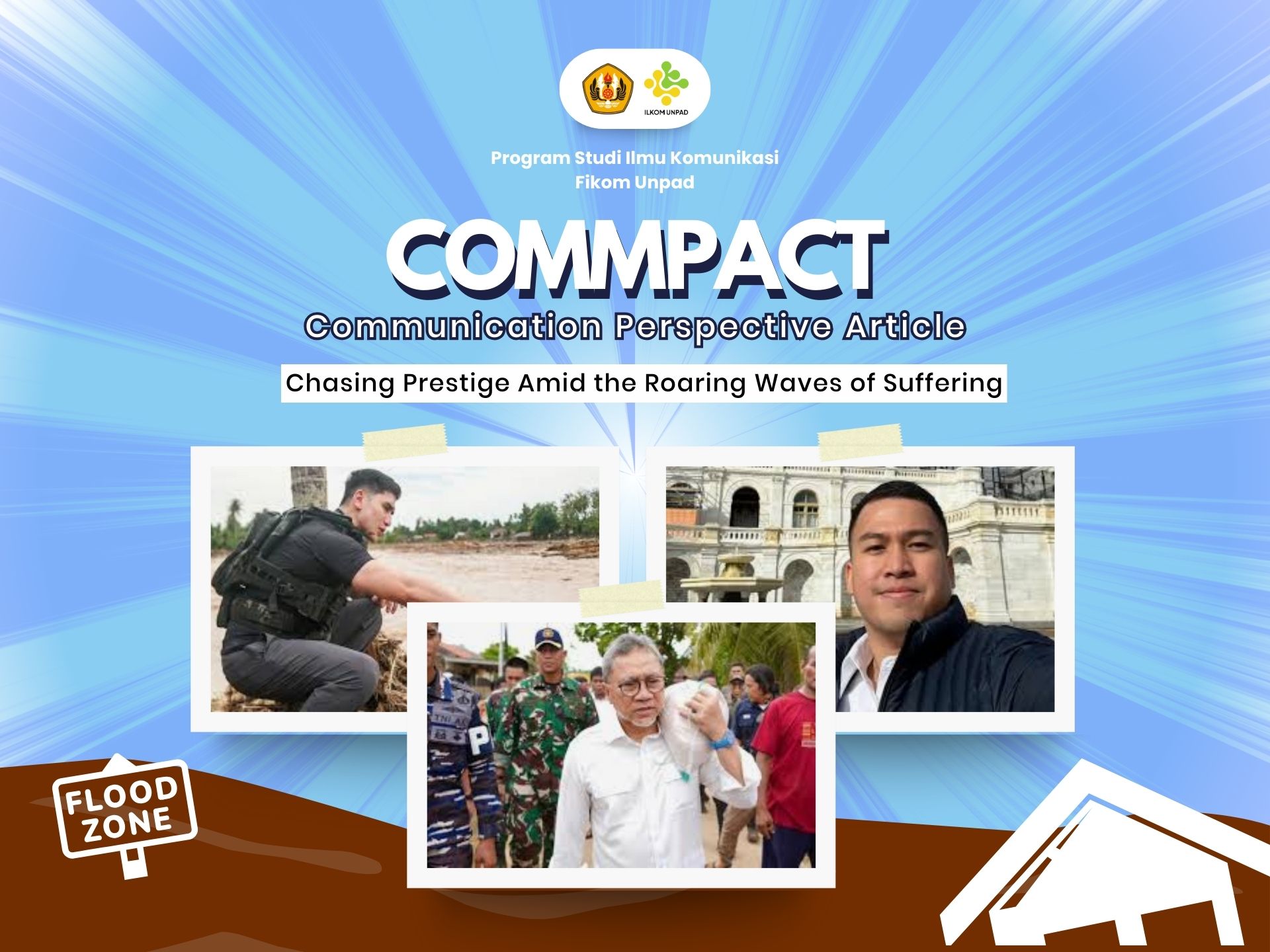
One such controversy involved Verrel Bramasta, a member of the House of Representatives (DPR). In a video circulating widely online, he was seen wearing a camouflaged vest resembling a military-grade bulletproof vest while surveying the flooded area. Realizing the public had begun to scrutinize his appearance, Verrel clarified that the vest was merely a tactical one designed to help him move and carry supplies in the affected zone. Nevertheless, this clarification failed to quell criticism, especially after he posted a photo on his personal Instagram showing himself pointing toward the flooded area. The post was perceived as odd and attention-seeking. Soon enough, the image was edited into memes and spread as online jokes.
Similar criticism was directed toward Zulkifli Hasan, the Coordinating Minister for Food Affairs. In a viral video on social media, he was seen carrying a sack of rice while distributing aid in flood-affected areas. Instead of being praised, the act was perceived as performative, seemingly staged for image-building and disconnected from the real situation on the ground. Netizens argued that the gesture appeared exaggerated and lacked sincerity. Some even linked the spectacle to Zulkifli’s controversial deforestation policies during his tenure as Minister of Forestry, when 1.6 million hectares of forest land reportedly opened—an action suspected of contributing to the worsening floods in Sumatra. Responding to criticism, Zulkifli explained that his actions reflected the value of mutual aid instilled in him since childhood. Even so, the public continued to view the gesture as an attempt to elevate his prestige.
Another controversy came from Agung Surahman, assistant to President Prabowo Subianto, who posted a “A Day in My Life” video during a visit to the affected region. The video opened with footage of him preparing at a hotel, followed by travel on a luxury plane, an aesthetic visual far removed from the suffering of the victims. The stark contrast sparked harsh criticism regarding ethics and sensitivity. Although Agung apologized and insisted that the content was not meant to flaunt lifestyle, the video remained heavily ridiculed, particularly concerning how officials and government staff ought to behave during crises.
These incidents show that communication, both verbal and nonverbal, cannot be separated from its social context. In disaster situations, every gesture, manner of appearance, and tone carries meaning in the eyes of the public. Even well-intentioned actions can turn negative when not accompanied by sensitivity to the circumstances. In this regard, the failure to understand communicative context may create distance between leaders and the people, and even deepen perceptions of social inequality.
Ultimately, these events serve as a reminder that communicative sensitivity must be upheld earnestly, especially by public officials whose actions are closely scrutinized. In this sense, communicative awareness aligns closely with the effort to build governance that is responsive, transparent, and oriented toward public service. This is reflected in the Sustainable Development Goals (SDGs), particularly Goal 16 on Peace, Justice, and Strong Institutions. Ethical and context-aware communication serves as a bridge to maintain public trust in government institutions. Conversely, insensitive communication can damage legitimacy and create the impression that the government fails to understand its citizens’ conditions.
References:
Communication Perspective Article Vol #9