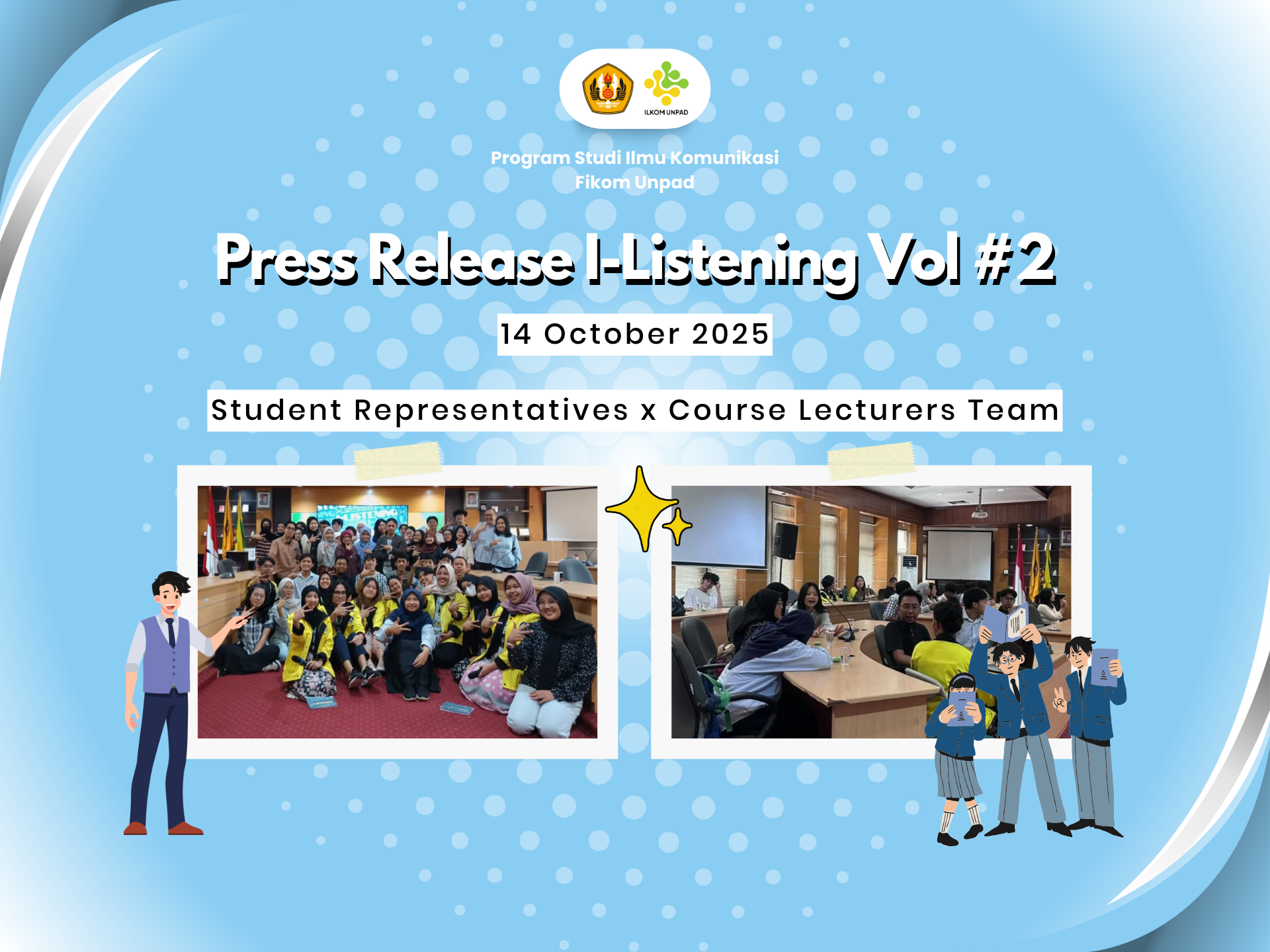
In an ongoing effort to enhance the quality of the learning process, the Student Association of the Communication Science Study Program (Hima Ilkom) at Universitas Padjadjaran once again held I-Listening Vol #2 on Monday, October 14, 2025. This dialogue forum brought together student representatives from various cohorts and classes with the teaching faculty in an open, participatory, and solution-oriented discussion.
The I-Listening initiative aims to bridge aspirations and evaluations between students and lecturers regarding the dynamics that occur during the learning process. The discussions were based on the results of a prior survey distributed to the lecturers, followed by an active dialogue session between both parties.
This session’s discussions covered a wide range of topics, from the evaluation of all courses for cohorts 2023–2025, the Magang Berdampak (Impactful Internship) program, to non-academic issues experienced by students from cohorts 2019–2025.
Students’ Appreciation & Expectation
In the first session, students conveyed various inputs regarding the effectiveness of learning methods and class evaluation processes. Several key points raised include:
- Cohort 2023 representatives highlighted issues such as unclear learning plans (RPS) in outlining course content, classroom facility problems, and insufficient depth in material explanations.
- Cohort 2024 participants noted that the pace of delivery in the Social Statistics course felt too fast. Nevertheless, they appreciated the lecturers’ patience in explaining complex concepts.
- Cohort 2025 students expressed concerns about several courses that were considered monotonous, overly theoretical, and lacking in interactivity. They also mentioned inconsistencies in class schedules, including sudden changes or shortened sessions.
- Meanwhile, students currently participating in the Magang Berdampak program raised concerns about several courses that could not yet be converted for internship credits.
Lecturers’ Responses to Students’ Feedback
After hearing the students’ input, the lecturers also provided their responses. Some key points highlighted include:
- Ms. Ditha and Ms. Purwanti proposed that future I-Listening sessions adopt a more interactive dialogue format between student representatives and lecturers to reach solutions more directly and efficiently.
- Ms. Shava emphasized the importance of clear technical solutions related to the use of the Wayground and Live Unpad platforms. She also stated that the teaching team would coordinate more closely with the facilities and infrastructure division regarding classroom use.
- Mr. Kunto clarified that the conversion policy for the Magang Berdampak program aligns with the 2025 revised curriculum. Under this policy, students from the 2025 cohort will receive full internship conversion in their fifth semester, while earlier cohorts will still follow the previous curriculum.
- Ms. Nadia acknowledged that the dense course material often limits discussion time, and she plans to evaluate her teaching methods to make classes more interactive. Ms. Zeta also emphasized the importance of student participation in building an engaging classroom atmosphere.
Discussion on Nonacademic Issues
Beyond academic evaluations, I-Listening Vol #2 also addressed issues of communication ethics and safety within the campus environment. Some students shared unpleasant experiences such as body shaming and acts of violence among peers.
In response, Mr. Andika stressed that the study program will take all reports seriously. He encouraged students to report directly to the Head of Study Program (Kaprodi) if they encounter similar cases, while also reminding everyone of the importance of maintaining respectful and healthy communication within the academic community. The I-Listening Vol #2 initiative aligns with the commitment of the Communication Science Study Program at Universitas Padjadjaran to support Sustainable Development Goal (SDG) No. 4, Quality Education. By fostering an open dialogue between students and lecturers, this program serves not only as a channel for aspirations but also as a concrete manifestation of transparency, participation, and collaboration toward developing a more equitable and adaptive education system.